Casino Alpha vs. Calculated Alpha: An AI-Powered Token Audit of Solana's Top KOLs
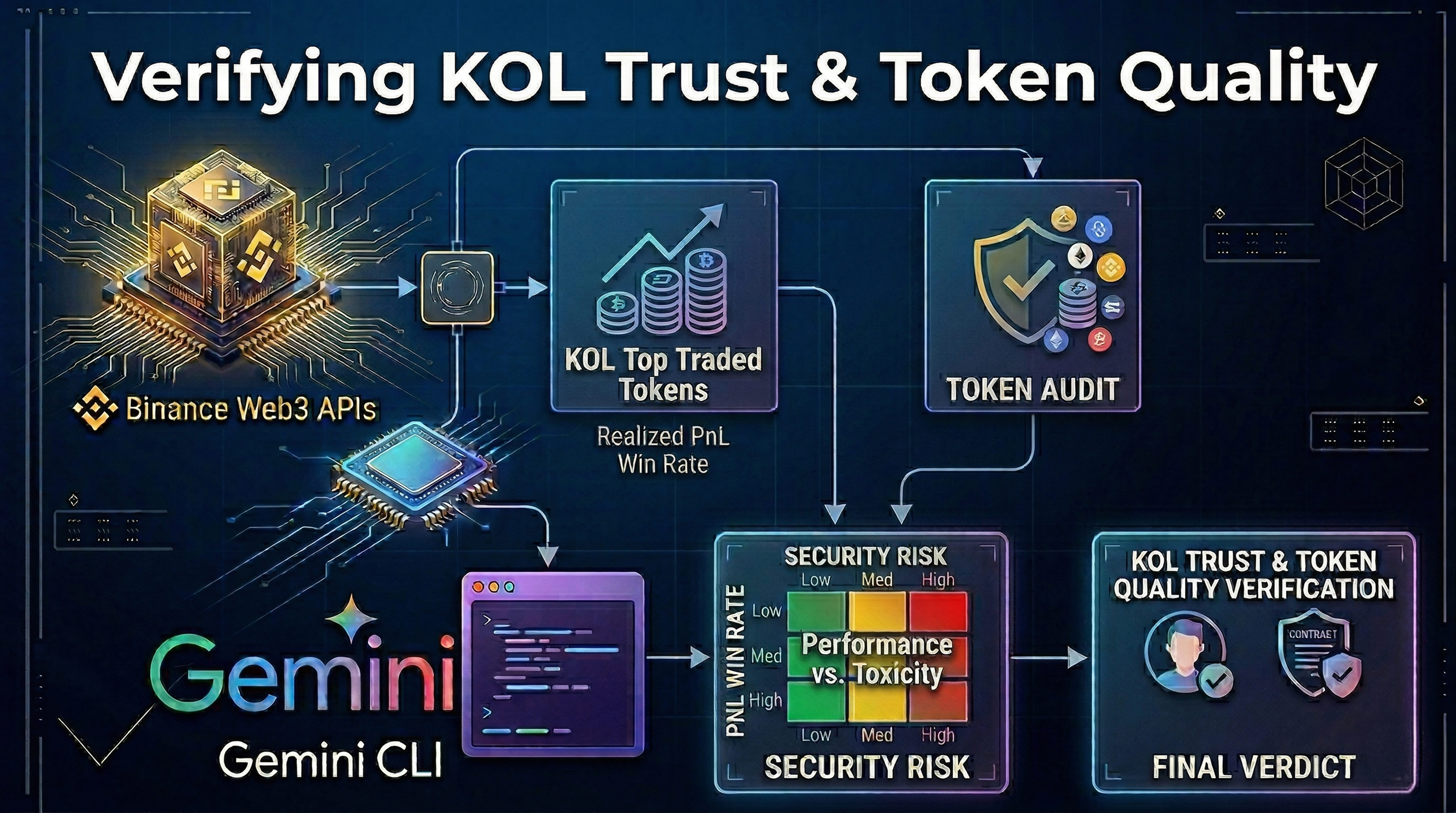
While PnL (Profit and Loss) is the industry's go-to 'Alpha' metric, it often masks extreme toxicity. At Scalo Labs, we've built an automated pipeline using Binance Web3 APIs to bridge the gap between on-chain PnL and real-time smart contract security audits. We aren't just looking at who's winning; we're auditing the quality of the win
To answer this, I built a 4-step automated pipeline using the Binance Skills Hub and Python to audit the security profiles of the top 50 Solana traders. Here is the technical breakdown of how we bridged on-chain performance with contract safety. This tutorial first uses the Address PnL Rank https://github.com/binance/binance-skills-hub/blob/main/skills/binance-web3/crypto-market-rank/SKILL.md#api-5-address-pnl-rank followed by https://github.com/binance/binance-skills-hub/blob/main/skills/binance-web3/query-token-audit/SKILL.md#query-token-audit-skill To setup Binance Skills Hub on your CLI, follow this blog post https://scalolabs.com/blog/web3-analytics/agentic-crypto-analytics-binance-skills-gemini-cli-setup
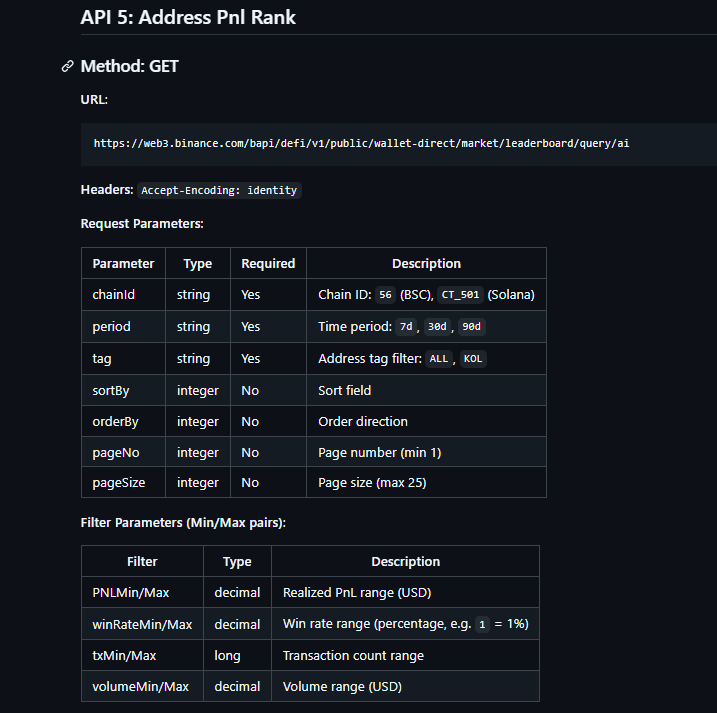
1. High-Signal Filtering via the Binance Skills Hub Standard wallet tracking is noisy. To isolate true market leaders, we deployed the address-pnl-rank API via the crypto-market-rank skill. Our logic targeted a specific 'Alpha' profile: KOL-tagged wallets on ChainId CT_501 (Solana) with a sustained win rate >50% and a minimum PnL of 500 over a 30-day lookback period. This ensures our dataset is comprised of active, high-signal practitioners rather than 'one-hit-wonder' wallets.
The Command in Gemini CLI:
Use address-pnl-rank in binance skills hub to find top 50 wallets
tagged as 'KOL' on chainId CT_501 (Solana) for last 30 days
where winRate > 50% and PNLMin = 500.
Sort by PNLMin Descending order. Only include KOLs
where the twitterUrl contains the X profile under genericAddressTagList field
The Technical Logic: By calling GET https://web3.binance.com/bapi/defi/v1/public/wallet-direct/market/leaderboard/query/ai, we isolated wallets meeting three specific criteria:
-
Performance: A win rate above 50% and realized PnL > $500.
-
Identity: Filtered the genericAddressTagList to ensure every wallet had a linked X handle.
-
Recency: A strict 30-day window to capture current market meta.
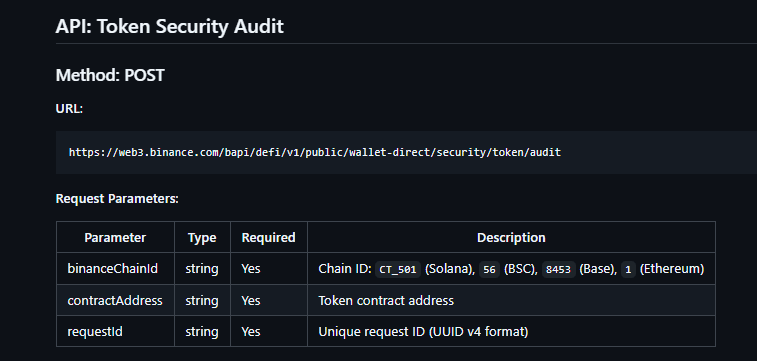
2. The Audit: Smart Contract Security Scanning Once I had the list of 50 KOLs, I needed to look under the hood of what they were actually trading. I extracted the Top 3 most profitable token contracts for each KOL totaling 150 unique smart contracts. I then passed these addresses through the query-token-audit API. This isn't just a basic scan; it checks for 15+ risk factors including ownership renouncement, minting risks, and "rug pull" indicators.
The Command in Gemini CLI:
"Use the query token audit api in binance skills to query
the top 3 contracts for each kol in the file under Token 1 Contract col,
Token 2 Contract col, Token 3 Contract col.
For each token contract, fetch the risk level (1-5)."
API Endpoint Called: POST https://web3.binance.com/bapi/defi/v1/public/wallet-direct/security/token/audit The API returns a Risk Level (0-5). A "0" means the contract passed all automated checks, while a "5" indicates a high-probability scam or a severely flawed contract.
3. The Aggregation: Building the KOL Risk Index Raw PnL is blind to contract integrity. A trader frequently interacting with low-liquidity, unverified, or high-risk 'honey pot' contracts isn't a market leader, they are a high-risk gambler increasing their total attack surface. By cross-referencing Binance's risk-token-list, we can calculate a Weighted Risk Score that discounts 'Casino Alpha' and highlights sustainable growth. Gemini CLI wrote a Python script to join the performance data with the audit results. For each KOL, I calculated an Average Risk Score based on the security of their top 3 tokens. The Calculation:
- KOL Risk Score = Arithmetic mean of the risk levels of their top 3 traded tokens. The Command in Gemini CLI:
Once top 3 contracts are fetched for each kol, average the risk level for each kol while also including the risk level for each contract in separate column. Build a final report for each kol and save to CSV.
- Data Export: All metrics (PnL, Volume, Win Rate, and Risk Scores) were compiled into a final top50_sol_kols_audit_report.csv. 4. Visualizing the Risk Matrix Raw data is fine for a CSV, but marketing analysts need to see the "Risk-to-Alpha" ratio instantly. Using matplotlib, I plotted each profile on a vertical bar chart. The Command in Gemini CLI:
Create a matplotlib chart. Convert the bar chart into a
vertical chart with the X profile handles on Y axis and
risk score on X axis. Rearrange the x axis to have the profiles
shown by risk score in descending order. Change the bar colour
to official SOL purple.
The Visualization specs:
-
Y-Axis: X (Twitter) Handles parsed from metadata.
-
X-Axis: Average Risk Score (0 to 5).
-
Sorting: Profiles are ranked in descending order, putting the highest-risk traders at the top of the list.
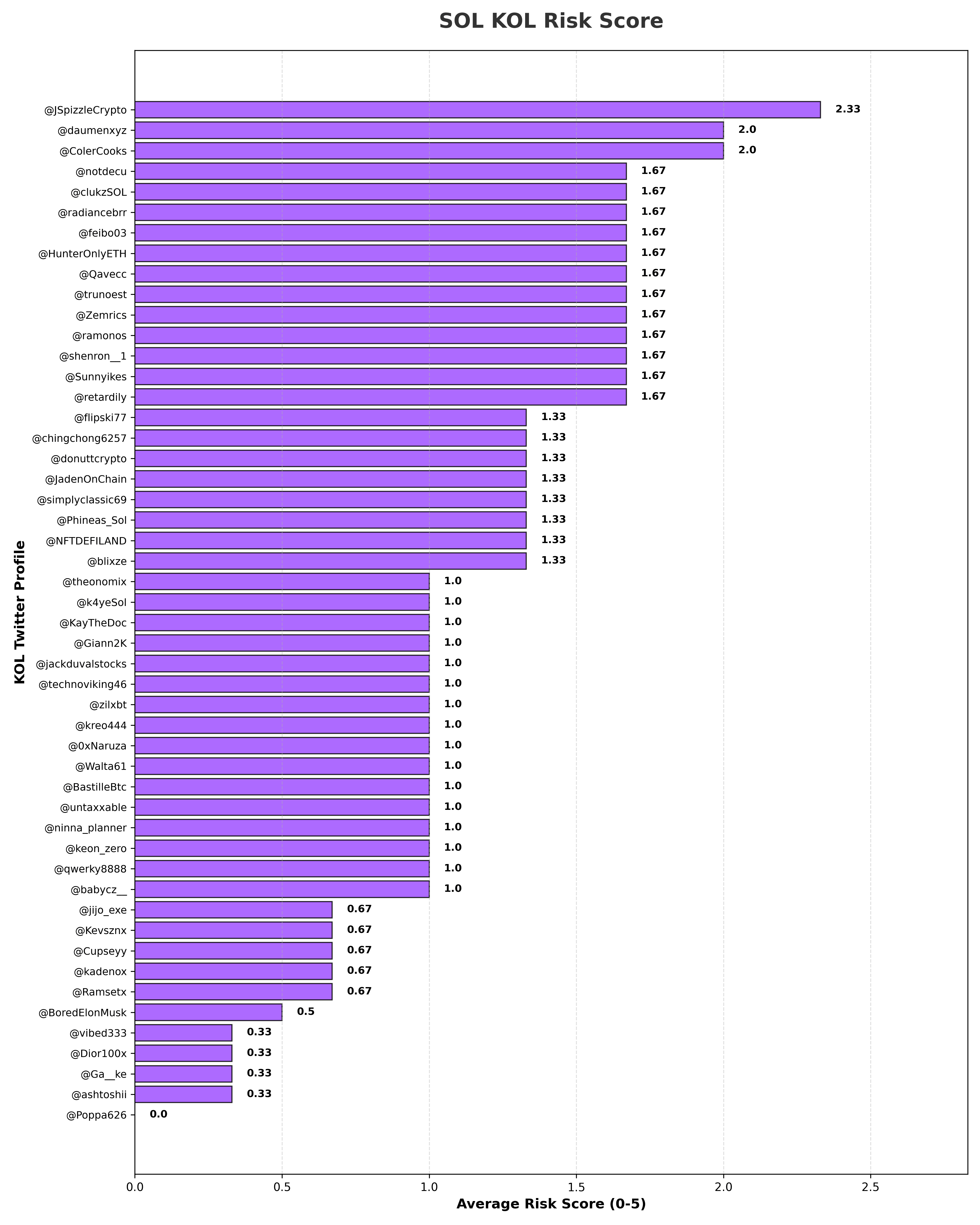
The Bottom Line: Why This Matters In decentralized markets, PnL hides the 'How.' Our Binance-Gemini pipeline enables a new standard of due diligence: Risk-Adjusted Alpha. This allows brands and analysts to distinguish between Calculated Alpha (systematic wins on audited, low-risk contracts) and Casino Alpha (volatile wins on toxic assets). For those looking to mirror signals or partner with KOLs, this second layer of security auditing is the difference between long-term growth and total liquidation.